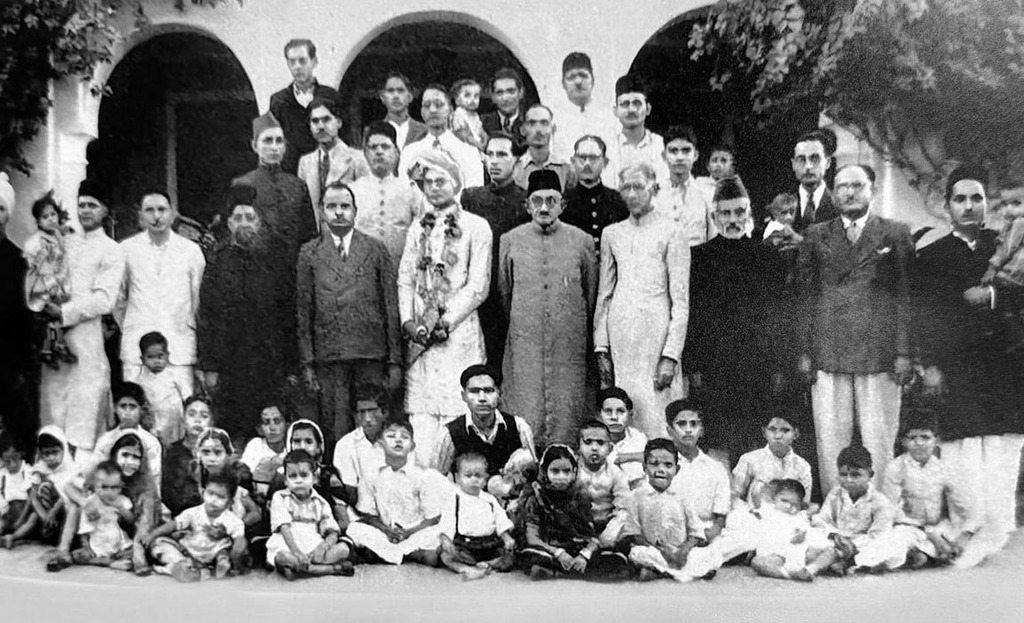
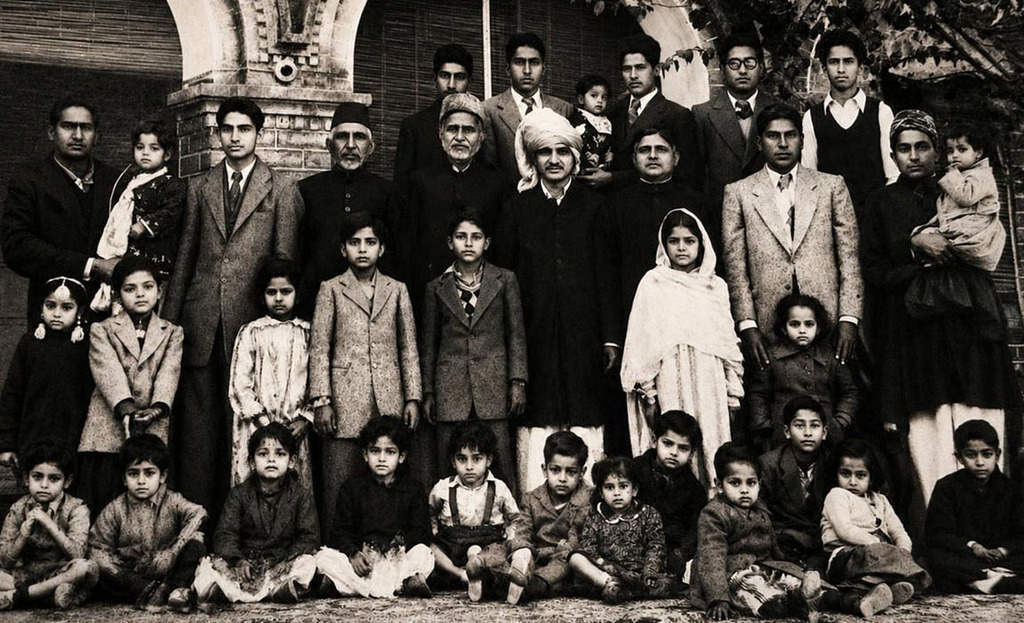
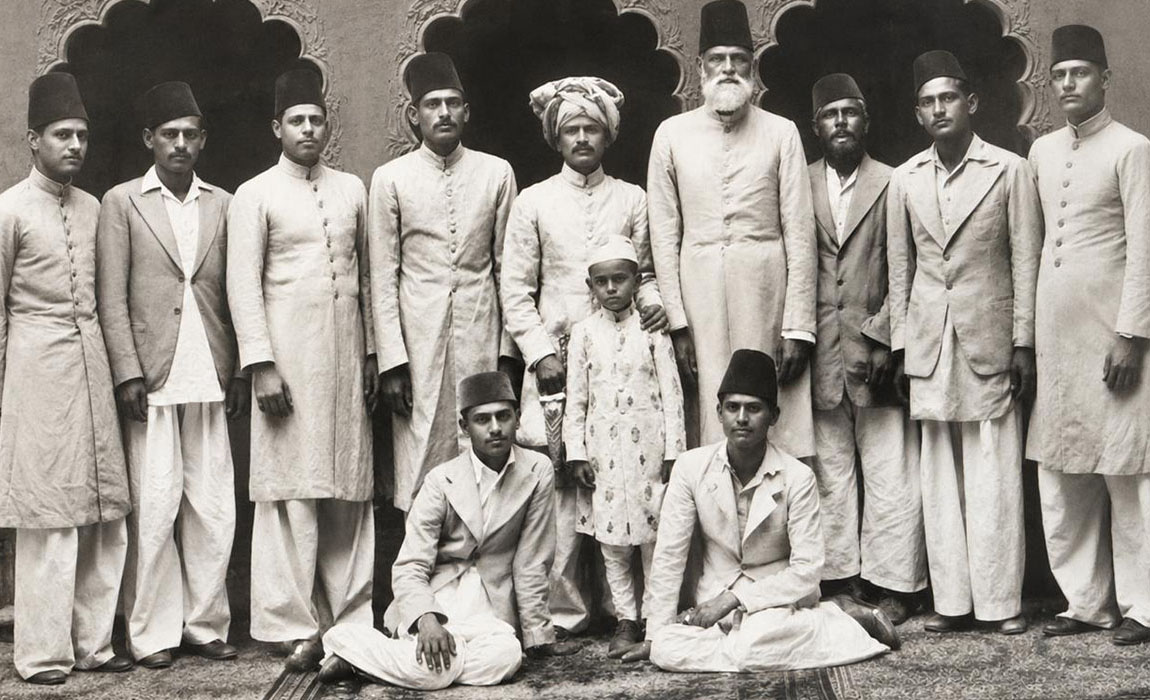
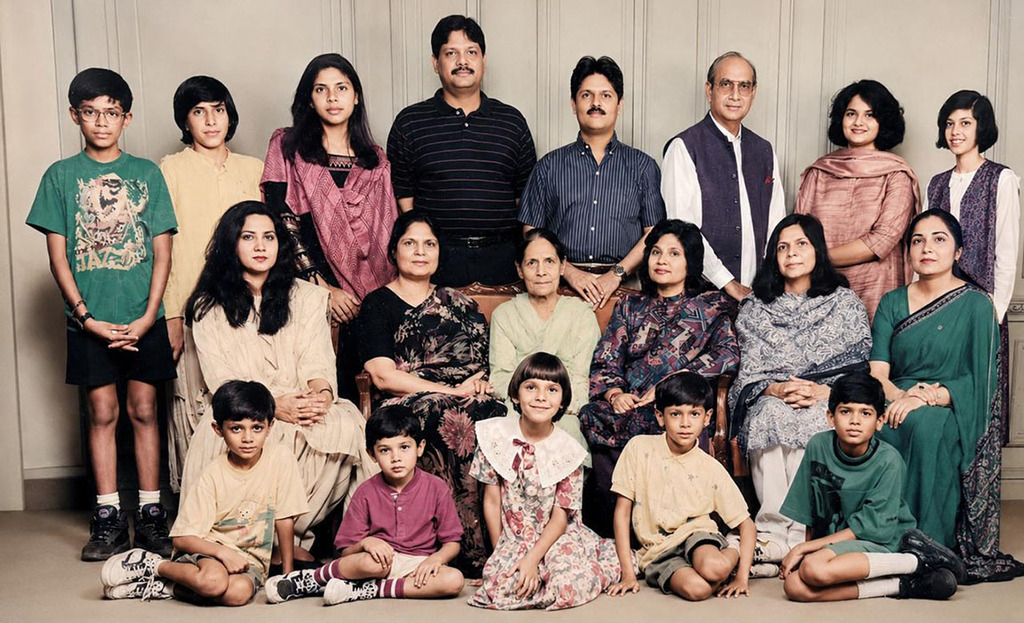
Genealogy
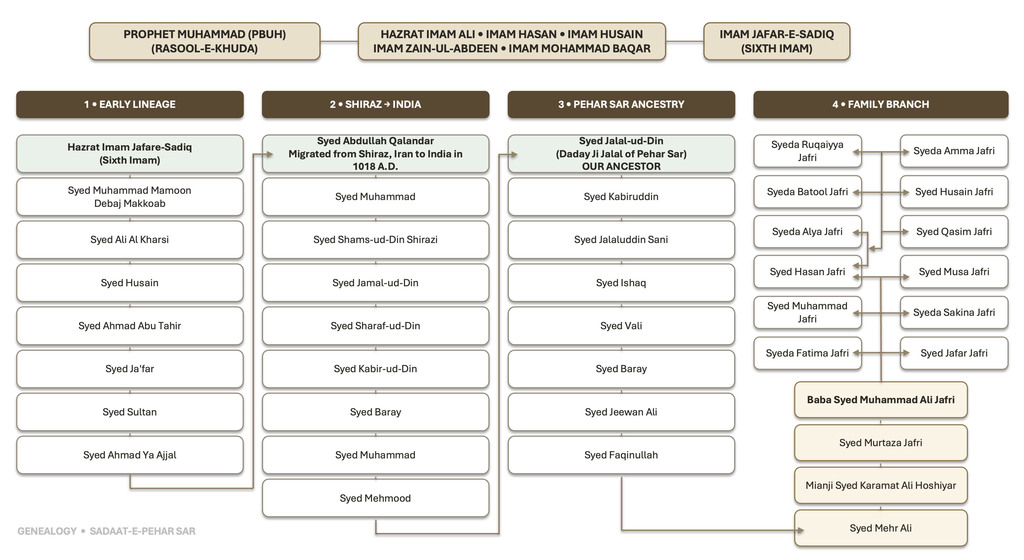

Imam Ja'far al-Sadiq (Hazrat Imam Jafar): جعفر ابن محمد الصادق, romanized: Jaʿfar ibn Muḥammad al-Ṣādiq; c. 702–765) regarded in Twelver Shi'ism as the sixth Imam. Sources give his birth around 80/83 AH (approximately 699–703 CE) and death in 148 AH/765 CE. He was the son of Imam Muhammad al-Baqir. Born in Medina , al-Sadiq was about thirty when his father and the fifth Imam, Muhammad al-Baqir, passed away after designating him as the next Imam.
He had a unique lineage among the Twelve Imams, being a descendant of Hazrat Ali through his father and of Hazrat Abu Bakr through his mother. A scholar, jurist and hadith transmitter, Ja'far al-Sadiq was the eponymous founder of the Ja'fari school, the largest and principal school of Islamic jurisprudence in Shia Islam. In the canonical Shia hadith collections, more traditions are cited from him than that of the other Imams combined. Al-Sadiq taught one of the largest recorded bodies of students, with sources reporting that around four thousand scholars studied under him. Among his students were the prominent Sunni scholars Abu Hanifa and Malik ibn Anas, who later founded the Hanafi and Maliki schools of Islamic jurisprudence.
Hazrat Jafar spent almost all of his 64-year life in Medina, making him the longest-lived of the Twelve Imams. He also revered in Sunni Islam as a reliable transmitter of hadith, and figures prominently in the initiatic chains of many Sufi orders.
The family tradition identifies Syed Abdullah Qalandar Shirazi as a descendant of Imam Ja'far al-Sadiq who came from Shiraz and eventually became associated with Pehar Sar.
Pahar Sar (Historical Village)
Rajgarh, Rajasthan, India
A Pehar Sar/Jafri family historical account available online says that Abdullah Qalandar Shirazi and his brother Fathullah Shirazi were descendants of Imam Ja'far al-Sadiq and were scholars associated with the army of Mahmud of Ghazni who conducted several campaigns in the Indian subcontinent beginning around 1000–1001 CE. Historical sources record campaigns in the Punjab and Multan in the early 11th century.
Mahmud Ghaznavi's soldiers under Abdullah Qalandar are said to have conquered a village in eastern Rajasthan. The traditional account connects the name Peharsar with a battle lasting one pehar, approximately three hours. Hence the name of the village eventually becoming Peharsar. Pleased with Abdullah’s valor, Ghaznavi gave Peharsar to Abdullah and his brother, who then invited other families descending from Jafar al-Sadiq (known as Jafri) to settle in Peharsar.
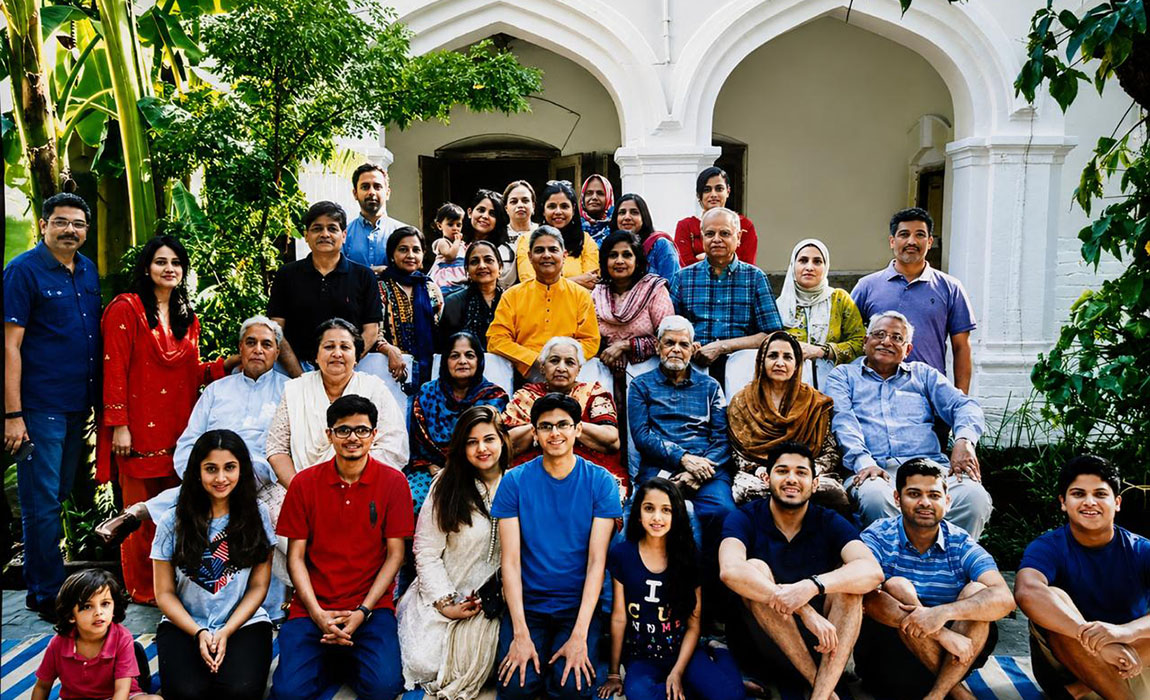
This section presents selected excerpts from my sister Syeda Ruqaiya Jafri’s book “وراثت کا سفر” (Journey Through Heritage), published in both English and Urdu editions.
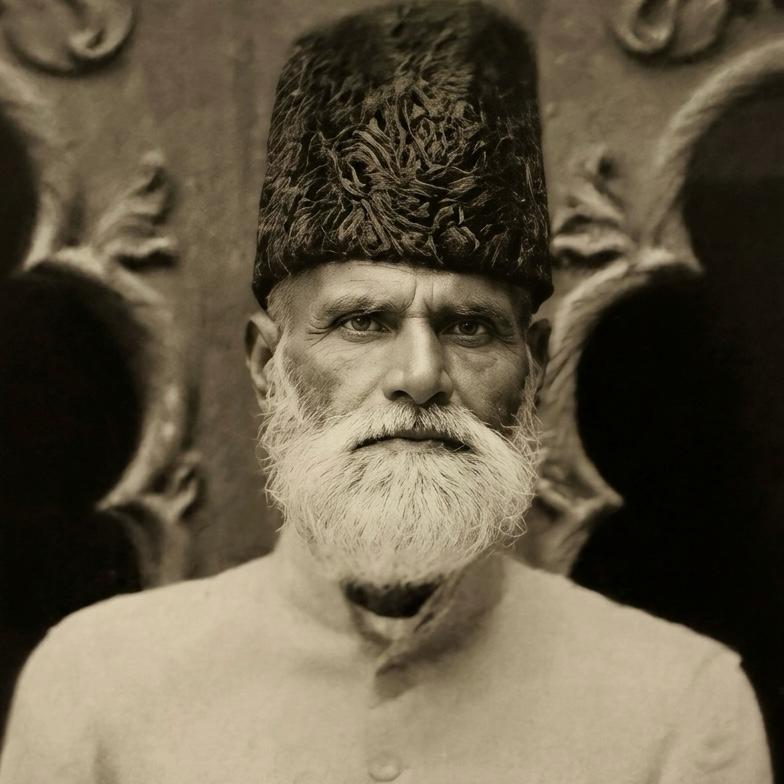
Syed Muhammad Ali Jafri
(Paternal Grandfather)
Baba Syed Muhammad Ali Jafri; known as Baba Jafri, was a distinguished educationist who headed several educational institutions in Bharatpur and Agra. His tenure as Principal of Islamia College (Railway Road), Lahore, from 1903 to 1906, was particularly noteworthy. The college would later become an important centre for the leaders and workers of the Pakistan Movement.
In December 1909, Baba Jafri represented the "Islamiyan-e-Muttahida Punjab" at the "All India Muslim Educational Conference" in Rangoon (Burma). M. Rafiq Afzal, the biographer of Malik Barkat Ali, a leader of the Pakistan Movement (a close associate of Quaid-e-Azam), writes that “Malik Barkat Ali always sought guidance from Baba Jafari!” In 1921, the joint meetings of Allama Iqbal and Baba Jafari with the renowned Iranian religious scholar Allama Abdul Karim Najafi Zanjani at the residence of Nawab Muhammad Ali Qazilbash on Empress Road, Lahore, were much talked about in the Muslim Ummah.
In December 1909, Baba Jafri represented Islamiyan-e-Muttahida Punjab at the All India Muslim Educational Conference held in Rangoon, Burma. His standing among the leading Muslim intellectuals and political figures of the time is reflected in the account of M. Rafiq Afzal, biographer of Malik Barkat Ali, a prominent leader of the Pakistan Movement and close associate of Quaid-e-Azam. Rafiq Afzal records that “Malik Barkat Ali always sought guidance from Baba Jafri.”
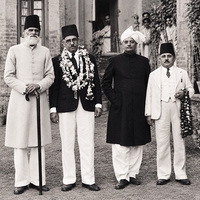
L to R: Baba, Khawaja Dil Muhammad, Nawab Muzaffar Khan, Syed Mohsin Shah
In 1921, Baba Jafri and Allama Muhammad Iqbal held a series of meetings with the distinguished Iranian religious scholar Allama Abdul Karim Najafi Zanjani at the residence of Nawab Muhammad Ali Qazilbash on Empress Road, Lahore. These meetings attracted considerable attention and were widely discussed among the Muslim intellectual and religious circles of the time.
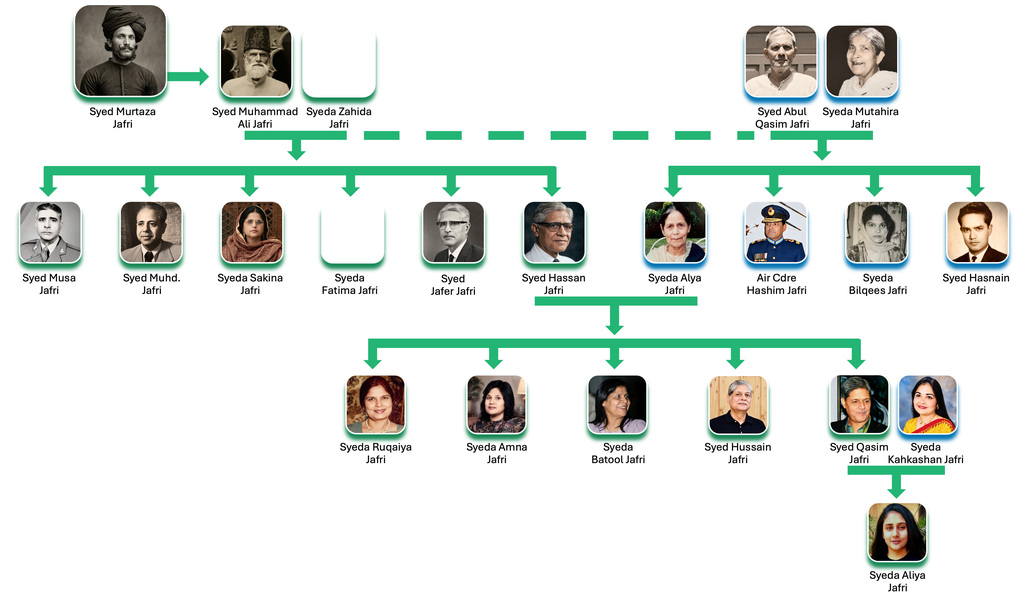
Baba and Amma Jaan (Paternal grandparents) had in all, twelve sons and daughters. One soul returned from half way. By the time I was born only six were alive, four sons and two daughters. Baba would say that he and his wife had negotiated a semi partnership with GOD by surrendering half their children to His will. Seven years before 1 was born, the youngest, Husain Chacha marhoom? died at the age of fourteen. Safi Lukhnavi wrote the marsia which is engraved on his tombstone.
Among the surviving sons Abba, Musa Chacha Jaan and Mohammad Chacha Jaan were successive siblings. Their friendship was deep, their differences of opinion equally intense. After an interval two sisters Sakina (Bari Phuphi) and Fatima (Choti Phuphi) were born followed by the fourth brother, Jafar Chacha Jaan. The three older and the three younger siblings formed two distinct groups in the household. The older group was frequently out of the house, whereas the younger group spent most of its time indoors. Temperamentally each was unique. Abba was not a poet but had a poet's keen sensibilities. His temperament was akin to Ghalib's; Musa Chacha Jaan was a soldier both by profession and by temper; he was not subtle in expressing his feelings and did not shy from taking actjon. Mohammad Chacha Jaan was the quintessential poet (he became one of Urdu's greatest poets of humour and satire).
Our paternal grandmother was good looking and simple by nature. She was never harsh with her daughters or daughters-in-law. Her manner and attitude was emphatically different from the typical women of those times. In comparison, Baba, my paternal grandfather, and Amma, my maternal grandmother were dignified and intelligent. Though with rather ordinary looks their towering personalities had a positive influence on people. Amma had never been to school but she was definitely very worldly-wise, prudent, meticulous and courageous. She knew how to negotiate through difficult times with remarkable leadership qualities. In spite of being known to speak her mind she knew how to respect others and command respect. In comparison, Baba had acquired the best education available in his day.
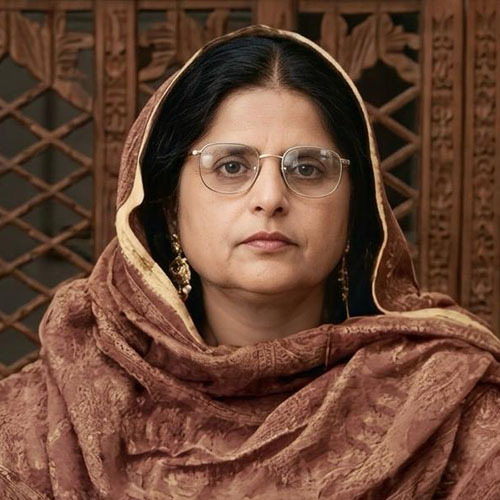
Sakina Jafri: Bari Phuphi (Left) Bari Phuphi was the intellectual among ladies of the family who was still searching for a voice and stature within the family and society at large. She did not achieve either, but she did not give up the struggle or her right. In a last defiant gesture as she faded, she handed this torch to us. Affirming a clear voice and identity demands struggle and sacrifice, and we offered both. This torch which was lit at Bari Phuphi's birth some ninety two years ago still glows. Insha'allah, our next generation will not face the same challenges.
Fatima Jafri: Choti Phuphi (Picture not available) was organized and industrious. She too could not give appropriate expression to her talents. Both sisters had considerable leadership qualities and unique personalities; both never went to school. Tutored at home, their command over Urdu, Persian and Punjabi and Fiqh (Jurisprudence) was impressive. They could read and write Arabic and English. They wrote English in an exquisite hand, far superior to what appeared to be our scrawling. They were able ladies of considerable potential and enormous reserves of creativity, but they never made us feel that they were far superior to us.
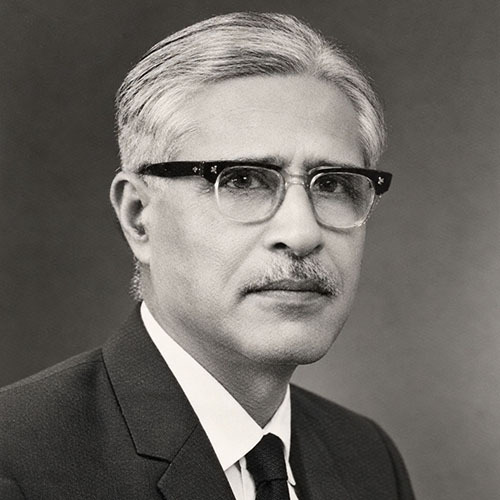
Jafar Jafri: Chacha Jaan (Left), other than my aunts was the sage and the pious one in the family. There was great respect bordering on awe for the elders in the family. Chahcha Jaan would submit to their scolding quietly but the moment he was out of earshot he would grumble and complain. On occasions when he felt his elders to be unjust, he would fret over the likelihood of their stand being taken as the right one. He had a special kind of refinement. He was very sensitive though he endeavored all his life to prove otherwise.
What went wrong probably was that the group of elder brothers became domineering. They must have loved their sisters but they never paid enough attention to their sisters' upbringing. Probably no one at that age has that kind of concern. During my childhood I resented this about my father and my uncles.
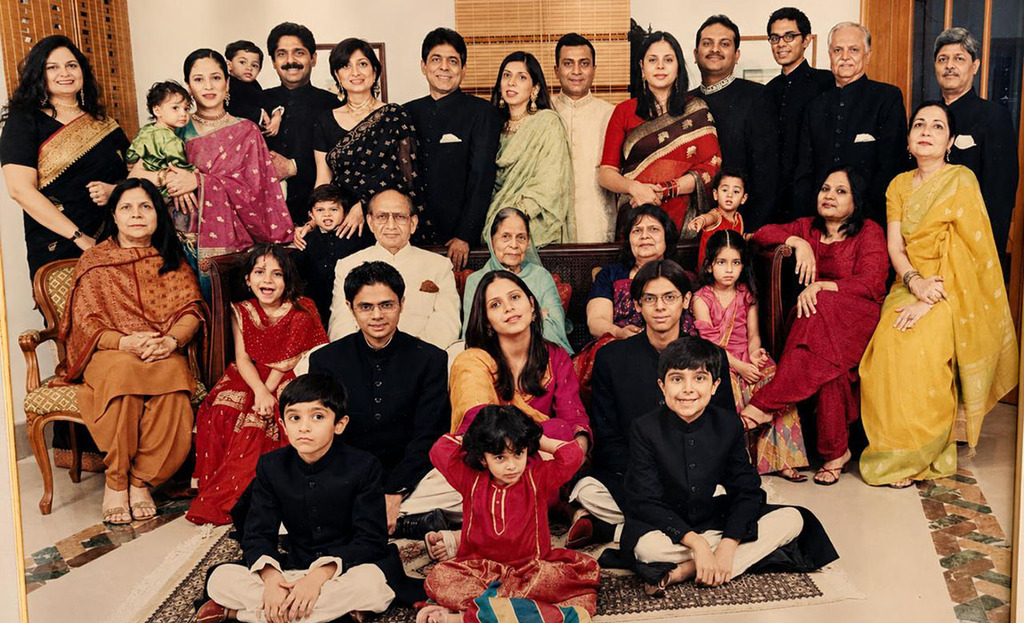
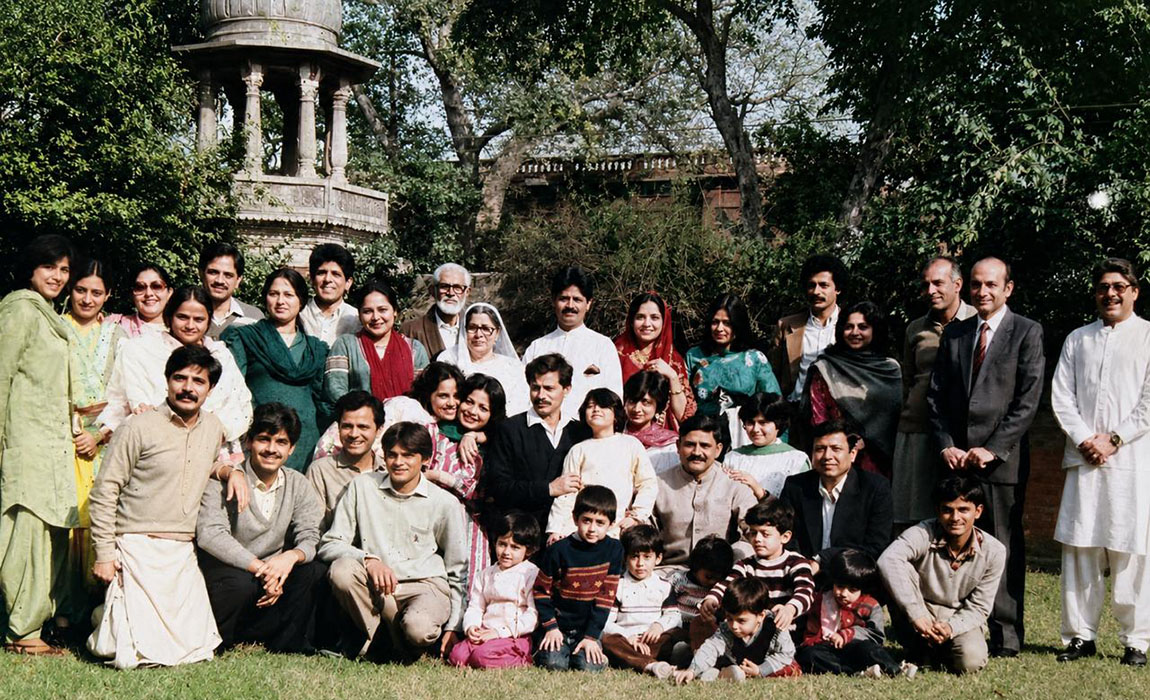
Maternal and Paternal Families
On the paternal side of our family sons outnumbered daughters. Daughters were pampered far more therefore. All the older children were male except in the families of Abba and Choti Phuphi, and except for Abba and Musa Chacha Jaan's families all had only one daughter and several boys. Abba married late. As his oldest child I had an innate fear--what if something happens to Abba? There would be nobody to lend him a helping hand. I had a sense of guilt at being a girl for an eldest child. I decided I will not marry and instead be his support. When I was six I used to lie alone in the drawing room and cry about this apprehension. This fear did not leave me until Abba's death. Much later I discovered that this fear must have been in the genes - my cousins also went through the same trauma. May GOD grant a long life to Hamid, as Zain at age 8 has started to worry over this same fear. Perhaps some day we can collectively exercise this demon.
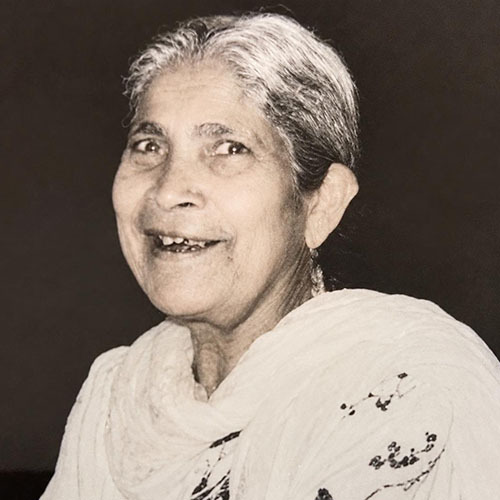
Syeda Mutahira Jafri
(Maternal Grandmother)
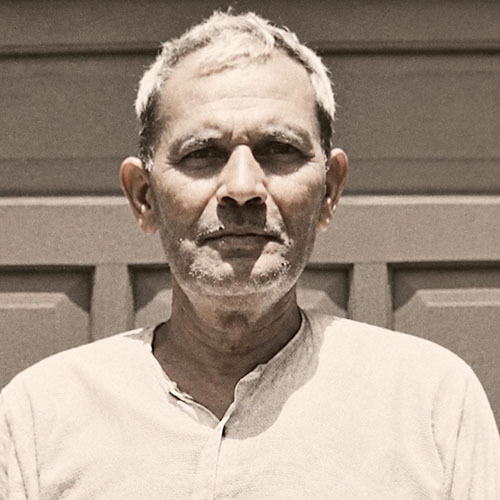
Syed Abul Qasim Jafri
(Maternal Grandfather)
When our generation was growing up, the family had begun to meet an important measure of enlightenment at a time when social conditions were different still; daughters began to be encouraged to think and voice their thoughts. Their views were taken seriously. In no way were they given the impression that brothers were naturally 'superior' because they were male. Sons and daughters were expected not to cross boundaries of behavior set down by our religion, which they accepted unquestioningly. Daughters were not married off by parental diktat. As a result daughters were content with their lives and never felt the need to use marriage as an escape from home. This approach towards daughters arose from their fathers and brothers who - and not mothers or sisters-in-law consequently became role models.
Needless to say, the relationship between boys and girls included the aspect of sisters being teased and joked with, sometimes to the point of hurt. In our generation the need for better communication between fathers and daughters and brothers and sisters had arisen, but it wasn't completely acknowledged. This communication has improved significantly in the younger generations. Despite that, to this day, girls mostly have a difference of opinion with their fathers and brothers, not so much with their mothers.
In Abba's generation, the marriage of his sisters was approached somewhat differently. Their brothers and father (Baba) made the decision on the choice of a husband. My aunts wished to have a say in the decision. Our religion granted them the right to do so. But the very notion of voicing their opinions, on the demerits of a proposal especially, drew considerable displeasure from their peers and elders. I wonder why Baba and his sons did not include them in this process as was their right. Had the final decision been left to them, obtaining their acceptance might have been easier. They could have agreed right away. Instead they resisted perhaps a little more than merited because they felt that this approach usurped their rights, At the end the unilateral decision by the males of the family was accepted. I do not know what effect it had on the marriages eventually.
On our paternal side emphasis was on seeking knowledge and being well-spoken. My maternal family members were storytellers employing flowery language. Eating well, dressing up and conversing well were the priorities. I quote one example of how they made a point. At the dining table one day the comment was, "The salt in the daal crackles"; They loved flavour, good taste and laid great emphasis on how something was presented. My paternal side took a more practical approach. A dish for instance would be passed on with "Try it. It is nutritious and purifies the blood"
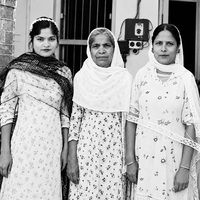
L to R: Bilquis Fatima (Khala), Mutahira Khatoon (Nani), Alya Khatoon (Mother)
Our maternal family's social skills were superior but paternal family was considerably more influential. Both were equally steeped in the spirit of humanitarian service (which, frankly, this account of their personal relations does not dwell on as it requires a narrative apart).
Our paternal family's relationships with friends would eventually encompass their families and gradually some of their friends' families as well. This grew out of the open and somewhat unconventional approach established by Baba's parents three generations before me. Friends held very high importance in their lives. They knew how to nurture those relationships they felt warmly towards. These relationshipscarried on over successive generations. My maternal family was not entirely dissimilar but had better-defined rules about establishing and maintaining relationships with relatives and friends. The women in the family played a greater role in nurturing these relationships and passing them on to the next generation to whom the sensitivity of managing these sometimes delicate contacts was emphasized greatly. I remember observing my maternal grandmother's social skills with awe.
It surprises me that my paternal family, with its traits of intense, complex temperaments, inner conflicts and the occasional resultant problem, was blessed with a wide social circle. But of the people who came into contact with them a fair number must have seen through to the undilutedly affectionate, selfless core. I shudder to think sometimes what the result would be if that core had not held sway whenever the other aspects threatened the bounds of control. Most of my generation for one, has inherited such personalities.
Parents Friends & the Family Atmosphere
The reality at the time was that the education of a lot of boys and girls was disrupted due to the partition of India.
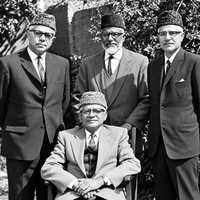
L to R: Muhammad Chacha, Musa Chacha, Jafar Chacha. Seated: Father
People were mostly concerned with finishing a course of studies in Urdu, Persian or Arabic and to pass the compulsory English language examination that went with it to acquire a certificate from the education board or the university. Before I went to school I used to listen avidly to Abba when he taught students at home as a hobby (teaching is probably in our genes), and I would listen.
Ammi was then honorary Librarian of the Ladies Club, Gujranwala. During the monsoon, rains damaged the Club building which had to be vacated for repairs. All the books were shifted to our house for a few months. I was ecstatic.
Ammi and Abba were the oldest children in their families. Ammi's siblings were twelve, fifteen and seventeen years younger. In comparison the interval between Abba and his siblings was around two to three years each. At the time of their marriage Abba was thirty nine and Ammi was nineteen. I took my time coming to this world.
The biggest contribution parents make to their child is to give him or her a positive image of GOD, the Creator and Provider. Abba, in particular, never complained to GOD about any adversity. He would say that we do not fear GOD who is ever-loving, we fear our own misdeeds. May GOD protect Ammi, she always says that His blessings are bountiful just as our sins are limitless; He has rewarded us with more than our due.
Our Elders' Thought
An important priority of our family has been its children, and concern for their needs and future. I discovered some old letters written by our elders dealing mostly with the needs, attributes and problems of four or five generations of our children. (Some letters also draw attention to the needs of elders and the education of young mothers). One was written by Baba to Amma Jaan, one from Abba to Baba, one from Abba to Baray Phoopha Jaan, one from Abba to me and one from Abba to his then-newly-born grandson Sajjad. These letters also provide an insight into the temperaments of, and relationship between, these people. Despite the concern for protocol these relationships seem quite relaxed from their tone and tenor. Jafar Chacha’s letter is being re-produced as an illustration of this protocol. Yusuf Bhai believes that the concerns mentioned in Abba’s letter to Phoopha Jaan still exist. However, instead of solving them collectively we now tend to exercise undue reticence about them. I found admirable the trust between Baba, Abba and Phuppa Jaan and their way of approaching these issues.
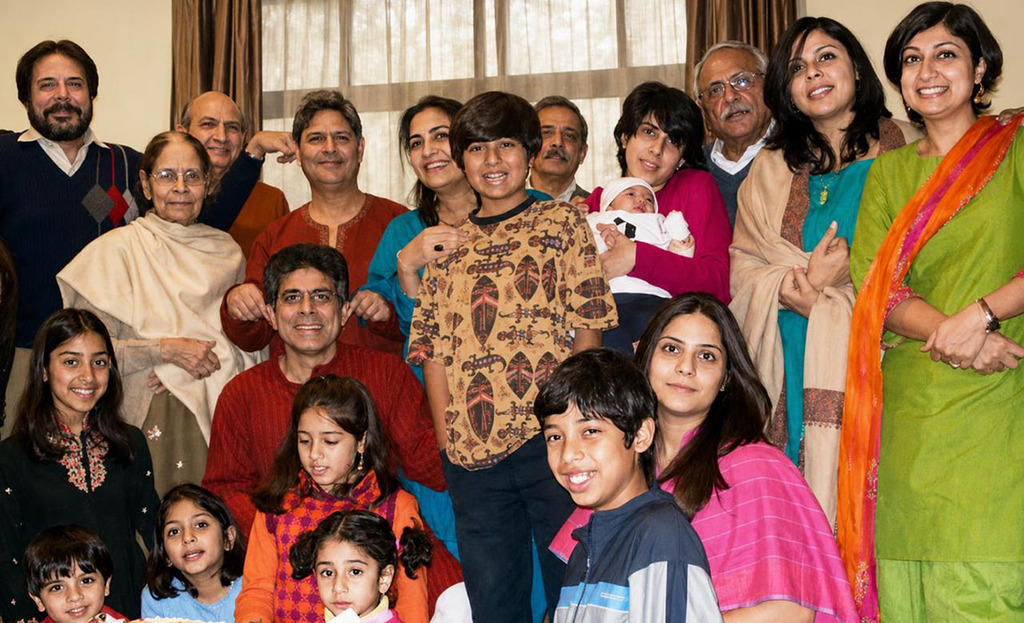
What Does Our Younger Generation Think!
Our girls have slightly complex relationships with their parents. While they do love their mothers they do not aspire to be like them. One possible cause is the tenor and approach their fathers take. Sometimes their brothers and they themselves comment on mothers the way their fathers do! Their criticism can border on the demeaning and the insensitive. Yet girls in our family do not forgive their fathers for being stern with their mothers. They are not prepared to accept for themselves the position given to their mothers in the family. As I have mentioned, girls consider their fathers their role models.
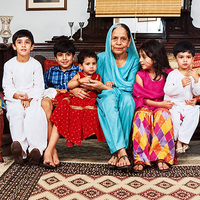
Apparently, despite having scattered into small units our family still has a strong clannish bias. Two of my nieces, when I asked them about the blanket of security clannishness provides, replied spontaneously, “It is very stifling.” Then I remembered that to me it now seems a protective umbrella; when I was their age it suffocated me too. True, it is a protective and a benevolent system but it also usurps discretion and authority from one and gives it to another. It is possible that on the face of it we might feel we can also survive without this system which does not believe in giving anyone, particularly girls, unfettered freedom. Those who rebel against it can find life becoming difficult. For, how can saplings survive if the pond that sustains them becomes contaminated in their eyes.
Our next generation is better-educated. Like us they too have their ‘mafia’! They care for and keep in touch with one another. The Internet has bridged geographical distances between them. My colleague Uzma thinks our closeness is because of fewer marriages outside the extended community. By this she probably means marriages into families with different cultures and values. Although now such marriages are on the rise, what happens remains to be seen. GOD willing it will be positive.
Our younger generation complains to us about what they call our double standards. They think that in most matters of religion there is equal retribution for males and females. Why then are men and boys allowed to indulge in certain things that are strictly out of bound for girls. For instance, drinking is as undesirable for grown ups as it is for the younger lot and as bad for boys as it is for girls. Likewise, if it is harmful for girls to date boys then why are boys and men given free rein to date. Also, why are we given flimsy and false explanations? I believe this denial by the older generation is raising a wall of mistrust between them and the new generation who believes we are deceiving them.